
AI Drug Discovery Enters Clinical Validation Era: From Technology Concept to Pharmaceutical Competition
As artificial intelligence moves deeper into the core stages of drug development, AI-driven drug discovery is transitioning from early-stage technological validation toward clinical and commercial verification. Industry experts believe that the future success of AI pharmaceutical companies will depend not on the size of their algorithms, but on their ability to consistently generate valuable drug candidates that advance into clinical trials and attract pharmaceutical investment.
AI-Designed Drugs Move Beyond Concepts Into Clinical Testing
In recent years, AI drug discovery has experienced a transition from capital-driven enthusiasm to practical industry validation. Earlier discussions around AI in pharmaceuticals largely focused on its ability to accelerate target identification, molecular design, and candidate screening. However, the lack of clinical-stage evidence led to ongoing questions about whether AI could truly transform drug development or simply improve the presentation of existing research processes.
This situation is gradually changing as several AI-designed drug candidates have entered human clinical trials.
At BIO 2026, AI-powered drug discovery once again became a major industry focus. Among the notable examples is Rentosertib (formerly ISM001-055), an innovative small-molecule drug candidate developed by Insilico Medicine for the treatment of idiopathic pulmonary fibrosis (IPF).
The significance of Rentosertib lies in the fact that AI was not only used as a supporting tool for compound screening, but also played a role in target discovery and molecular design.
According to research published in Nature Medicine, Insilico Medicine used generative AI technology to identify TNIK (TRAF2 and NCK-interacting kinase) as a potential therapeutic target and subsequently designed a small-molecule inhibitor targeting this pathway.
The Phase IIa clinical study was conducted as a multicenter, randomized, double-blind, placebo-controlled trial involving 71 patients with idiopathic pulmonary fibrosis.
Although Phase IIa results do not guarantee successful commercialization, as the drug must still pass larger-scale clinical trials and regulatory review, the milestone demonstrates a fundamental shift in the AI drug discovery landscape.
The industry’s key question is no longer simply whether AI-designed drugs can enter human trials, but whether AI platforms can consistently generate multiple clinical-stage assets and improve the probability of successful drug development.
Big Pharma Accelerates AI Investment as Commercial Value Emerges
As AI-generated drug candidates progress into clinical development, major pharmaceutical companies are increasing their investment in AI-driven innovation.
Eli Lilly, for example, has achieved significant growth through its GLP-1 medicines Mounjaro and Zepbound, but the company continues to invest heavily in next-generation drug discovery technologies to secure future growth opportunities.
Insilico Medicine recently announced an expanded partnership with Eli Lilly, including a $115 million upfront payment and potential milestone payments of up to $2.75 billion.
Under the agreement, Eli Lilly obtained global rights to several preclinical oral drug programs.
Industry analysts believe that large pharmaceutical companies are not investing in AI simply because it is a technological trend. Instead, they are seeking new sources of innovation and future drug pipelines.
The strategic value of AI drug discovery mainly lies in three areas:
First, improving research efficiency.
Traditional drug discovery often requires years of research from target identification to candidate selection. AI technologies have the potential to shorten early-stage development timelines and improve screening efficiency.
Second, expanding innovative drug pipelines.
As blockbuster drugs approach patent expiration, pharmaceutical companies urgently need new sources of growth. AI-generated drug assets provide another pathway for pipeline expansion.
Third, optimizing investment risks.
Through milestone-based partnerships, pharmaceutical companies can gain access to promising drug candidates while reducing upfront development risks.
The pharmaceutical industry is increasingly focused not on AI models themselves, but on whether AI can consistently generate commercially valuable therapeutic assets.
Chinese AI Biotech Companies Enter the Global Innovation Arena
The rise of AI-driven drug discovery is also changing the role of Chinese biotechnology companies in the global pharmaceutical ecosystem.
Historically, Chinese companies have played a significant role in CRO services, CDMO manufacturing, clinical trial execution, and pharmaceutical production. In many global drug development programs, Chinese companies primarily acted as service providers.
However, companies such as Insilico Medicine are increasingly moving toward upstream innovation, covering target discovery, molecular design, and early clinical development.
This represents a shift from providing research services to creating proprietary drug assets.
Industry observers believe that this transformation could strengthen China’s position in the global pharmaceutical innovation ecosystem.
As competition in global drug development intensifies, factors such as research efficiency, clinical execution speed, and the quality of innovative assets are becoming increasingly important.
At the same time, the global pharmaceutical supply chain is undergoing restructuring. While the United States and Europe continue to strengthen biotechnology security policies and supply chain controls, Chinese companies are gaining influence through advances in innovative drug development, clinical capabilities, and AI applications.
AI Drug Discovery Still Faces Major Commercialization Challenges
Despite its significant potential, AI drug discovery remains in an early stage of development.
A single AI-designed drug entering clinical trials does not prove that AI technology can successfully transform the entire pharmaceutical development process.
Drug development remains highly unpredictable, with challenges including clinical efficacy, safety evaluation, patient recruitment, long-term outcomes, and regulatory approval.
AI can accelerate early-stage discovery, but it cannot eliminate the complexity and uncertainty of clinical research.
Therefore, future evaluation of AI pharmaceutical companies will increasingly focus on three key indicators:
- Whether they possess drug candidates that have entered human clinical trials;
- Whether they have secured meaningful partnerships with major pharmaceutical companies;
- Whether they can continuously generate high-value innovative drug programs.
Conclusion: AI Drug Discovery Moves From “Investment Story” to “Clinical Validation Stage”
The AI pharmaceutical sector is entering a new phase, moving from technological demonstrations toward clinical and commercial validation.
The future competition will not be determined by who develops the largest AI model, but by who can use AI technology to discover safer, more effective medicines faster and more efficiently.
For the global pharmaceutical industry, AI may not immediately replace traditional drug discovery systems, but it is already reshaping how innovation value is created and distributed.
As AI-designed medicines begin to face real-world testing through clinical data, regulatory review, and commercial markets, the competition over the future model of pharmaceutical innovation has truly begun.
| Enter Zhuocheng | Product | Honorary Qualifications | Contact Us |
| Company IntroductionFactory Appearance | Raw materials Premixed agent product OEM products |
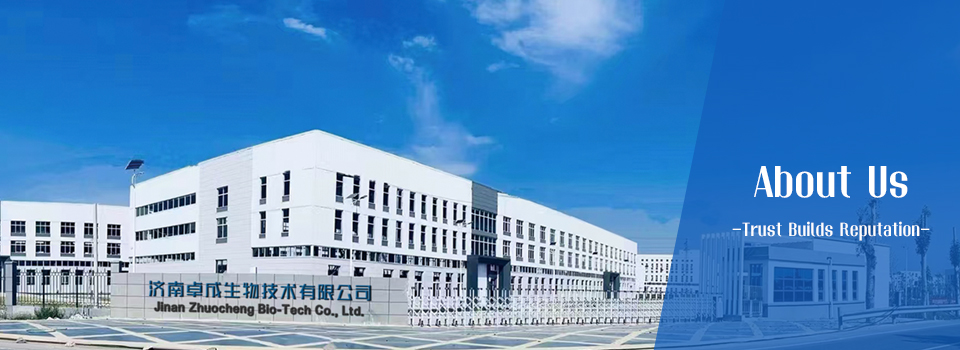
Company:Jinan Zhuocheng Bio-Tech Co., Ltd. Corporate email:info@zhuochengbio.com Address:Building 3, Ligao International, 1222 West Aoti Road, Lixia District, Jinan |

